Potential Barriers To Effective Communication
There are many barriers to communication, such as:
Background noise which may distract the audience from the presentation itself, background noise can be very frustrating to those who are trying to communicate with you effectively, background noise causes a lot of distractions and causes you to lose track of what is actually trying to be said, also, it may distract the audience and they won't be paying attention to what is being said. Background noise can frustrate a lot of people and put them off doing their work as they're not able to concentrate on their work to get it done, this can cause problems as the work can be important and the result will be something being put off, like a meeting, because the work hasn't been completed.

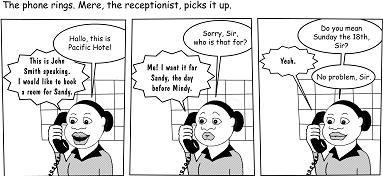
Cultural differences which make it difficult to communicate with those who are from a different culture, therefore being unable to speak English very well and the different diverse audiences. When it comes to cultural differences, it is essential that you understand the fellow workers culture, such as you may do something one way and they may do it another and you have to respect the way in which they do them, also, they may say something that sounds offensive to you when in reality it's not, or you may say something that isn't offensive but they take it in the offensive way, you must be able to communicate with other cultures effectively to avoid this and have an effective working area.

Accents can lead to the misunderstanding of what is being said, this is because they could either be talking too fast, or not clear enough, it could also be both depending on the accent (where the person comes from). Another problem could be when something is said, it could be meant in a different context as to what others know, this is because the area in which the person speaking comes from could say a lot of familiar words, just mean them in a different context.

Adapting content and style to suit audience needs basically means that you must understand each need specifically, let's say somebody has partial hearing, you must be able to project your voice loud enough in order for them to hear you, but you can't be mean about is as this will upset the audience, you must take your time and make sure that they understand what it is that you're saying so that what is being said can be understood the way in which you're aiming to have it understood, you almost must make your voice as clear as possible, you can't just be shouting to make them hear you, you must do it in a delicate manner.

Messages that are sent / received are
complicated, which can make it difficult to understand the terms or what is being
said them if the worker/receiver comes from a different area, where specific aspects mean something different. Also, any unfamiliar terms that may be in the messages for things
such as business reasons, the receiver of the information may not understand everything perfectly as they are new to the business and everything that goes on within it.

Any emotional barriers that there may be in the work area, for example, if there is a work-based relationship going on within the department, it could distract the workers, whether the relationship be a positive one or a negative, if the relationship is negative then the work produced won't be very good quality, where as if the relationship is a positive one, the workers won't be able to focus on working, they would be to busy talking or distract others while getting work done through talking.

If there is no attention being paid in the area
of work then the workers won’t know what it is that they have to do, which will result in the business being behind on work that has to be done or with the production of any products, also
if a worker is easily distracted then they may forget about what is more
important and focus on something else, resulting in them forgetting what it is that they are meant to be doing, also, if the worker is easily distracted, then they may lose any interest that they had in the task and not want to do it
and will put little effort into what it is that they are doing. If a message is
being sent then because of the lack of focus and interest put into the message,
it may not make sense to the recipient and the terms within the message may be
misread (which takes you back to the messages being sent).

If there are differences within what it is thathas to be done in the area of work between the workers that have been grouped
together then the work produced may be poor, if the workers have different
viewpoints of what has been produced then they won’t be able to agree on what
is best to be done, also, the work produced may not be completed and forgotten
about.

If there are physical disabilities between
workers, such as hearing problems or difficulties with a workers speech, then
there may be problems with the work, such as the wrong things being put into a
message document or the workers not being able to understand each other
correctly which may lead to misunderstandings between workers.

There may be problems with non verbal communication, such as documents being written down for the workers to work from may not
make sense, therefore making the task for the workers more difficult as they
don’t understand what it is that they have to do correctly, meaning that work
produced may not be as good as expected. Also, if a word has been spelled
incorrectly and the workers don’t know what the word is originally meant to be
or don’t understand the meaning of the word, then this will lead to other problems
within the area of work.

If a worker has difficulty speaking in English(or any other language that is required) then fellow workers won’t be able to
communicate with that worker and that worker won’t be able to communicate with
his / her fellow workers and will feel isolated or singled out from the work
that is to be produced.
If there are workers from different cultures,
there may be differences in how to get things done, such as work being produced
or just general conversations and how emotions get expressed through workers.
An example of this is if a worker has issues with personal space and another
worker violates this then the emotions that are being displayed may come across
as something other than what the actual emotion being displayed is.


No comments:
Post a Comment